Properties Uses Halogens. The horizontal rows on the periodic table are called periods.

Periodic Table Families
Element families on the periodic table are indicated by numbers located at the top of the periodic table Items can be categorized based on item families.
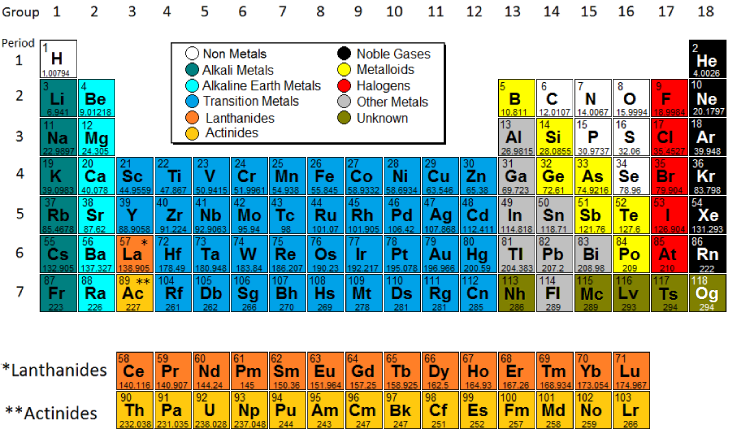
Families of periodic table. Periodic Table Worksheet Key. The IA family is made up of the alkali metals. There are 18 numbered groups in the periodic table.
The figure below lists some important families that are given special names. Periodic Table Worksheet Periodic Means. The Royal Society of Chemistrys interactive periodic table features history alchemy podcasts videos and data trends across the periodic table.
Periodic Table Families Worksheet Pdf. All the members of a family of elements have the same number of valence electrons and similar chemical properties. They all have seven.
Elements on the periodic table can be grouped into families bases on their chemical properties. Elements in each family. Families Of The Periodic Table Worksheet.
An element family is also called an element group. 21 Posts Related to Families Of The Periodic Table Worksheet. Group 1 of the periodic table are the alkali metals.
These elements are very un reactive because. August 15 2020 by admin. The IIA family is made up of the alkaline earth metals.
The elements in a group have similar physical or chemical characteristics of the outermost electron shells of their atoms ie the same core charge because most chemical properties are dominated by the orbital location of the outermost electron. Intro to the Periodic tablefamilies rowsppt. The vertical columns on the periodic table are called groups or families because of their similar chemical behavior.
The nonmetals form a loosely defined cross-family grouping as do the metalloids. Family members share similar chemical and physical properties. Are located on the far right column of the periodic table.
Each member of a family has the same number of valence electrons. When the elements are thus arranged there is a recurring pattern called the periodic law in their properties in which elements in the same column group have similar properties. The f-block columns between groups 3 and 4 are not numbered.
Looking At The Periodic Table Worksheet. Families on the Periodic Table. Are located in the second column from the right side of the periodic table group 17.
In chemistry a group also known as a family is a column of elements in the periodic table of the chemical elements. Click the tabs at the top to explore each section. Three systems have been used to number families and groups.
The older IUPAC system used Roman numerals together with letters to distinguish between the left A and right B side of the periodic table. Use the buttons above to change your view of the periodic table and view Murray Robertsons stunning Visual Elements artwork. To differentiate it from the other families in the periodic table.
Columns of the periodic table typically mark groups or families. Specific regions of the periodic table can be referred to as blocks in recognition of the sequence in which the electron shells of the elements are filled. Elements are assigned to blocks by what orbitals their valence electrons or vacancies lie in.
Each family has a. Knowing how to identify families the elements included and their properties makes it possible to predict the behavior of unknown elements and their chemical reactions. S- f- d- p-block in the periodic table.
In reactions these elements all tend to lose a single electron. About Press Copyright Contact us Creators Advertise Developers Terms Privacy Policy Safety How YouTube works Test new features Press Copyright Contact us Creators. All these elements tend to lose two electrons.
They are highly reactive and do not occur freely in nature. Start studying periodic table families. The Periodic table can be divided into nine families of elements each having similar properties.
Periodic table in chemistry the organized array of all the chemical elements in order of increasing atomic number. Learn vocabulary terms and more with flashcards games and other study tools. An element family is a column of elements on the periodic table.
Families on the periodic table include in addition to noble gases and halogens the alkali metals alkaline earth metals transition metals lanthanides and actinides.
Open your project in Excel. The Excel frequency function calculates the frequency of values that occur within a range of values.
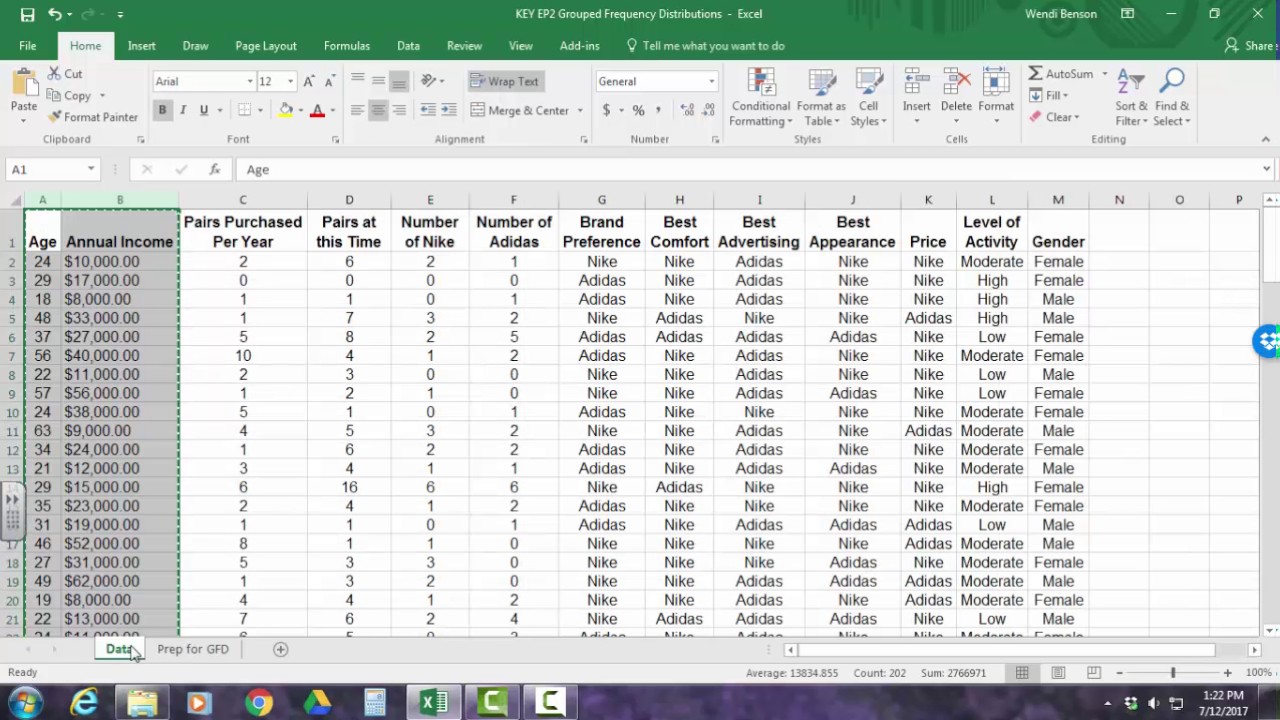
Grouped Frequency Distribution Tables And Graphs In Excel 2016 Youtube
A frequency distribution table in Excel gives you a snapshot of how your data is spread out.
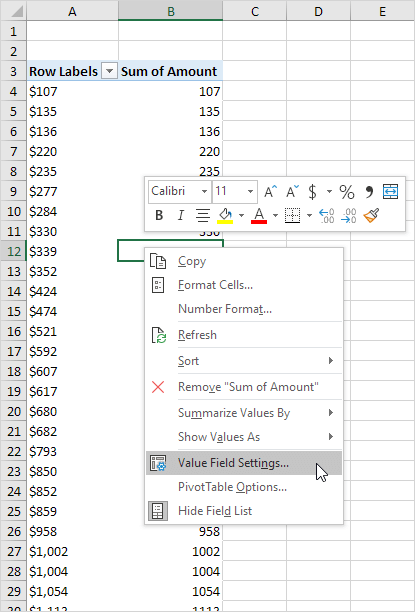
Frequency table in excel. But using a pivot table to create an Excel frequency distribution. To use the function you must highlight an array with 3 columns and at least k rows where k bmax MIN R1 bsize 1. How to Make a Frequency Distribution Table Graph in Excel.
Now your pivot table will appear either on a new worksheet or else the current one depending on what you chose in the previous step. The FREQUENCY function in Excel calculates how often values occur within the ranges you specify in a bin table. Dialog box for selecting your data.
Frequencies simply tell us how many times a certain event has occurred. Excel uses Scotts normal reference rule for calculating the number of bins and the bin width. You may learn more about excel from the following articles Excel Normal Distribution Graph Bell Curve.
When Excel displays the Data Analysis dialog box select Histogram from the Analysis Tools list and click OK. For example the following table shows how many items a shop sold in different price ranges in a given week. Its usual to pair a frequency distribution table with a histogram.
Insert a Pivot Table. To create an interactive frequency table in Excel take the following steps. So how might you use it.
Next insert a pivot table. You provide the numerical dataset thats the actual cells you use as your source a list of bin thresholds thats the categories into which youre sorting data and then press CtrlShiftEnter. Excels FREQUENCY array function lets you calculate a datasets frequency distribution.
This method works for Excel for Microsoft 365 Excel for Microsoft 365 for Mac Excel for the web Excel 2019-2007 Excel 2019 for Mac Excel 2016-2011 for Mac and Excel Starter 2010. To insert a pivot table execute the following steps. Frequency function in excel is used to calculate how many times a number is getting repeated or in other words we can say it calculates the occurrence of any number from the selected range of bin table.
On the Insert tab in the Tables group click PivotTable. Next click any cell inside the column with Row. Select the range A1A19.
Click the Data tabs Data Analysis command button to tell Excel that you want to create a frequency distribution and a histogram. Choose Count and click OK. Lets generate a frequency table for crime category.
So that we will get the values in all the column. Mean from a Frequency Table. The following dialog box appears.
In the Histogram dialog box that appears identify the data that you want to analyze. On the Insert tab in the Charts group click the Histogram symbol. Frequency Distribution Table Using Pivot Table.
You can also use the COUNTIFS function to create a frequency distribution. A frequency table tabulates the number of times values from a data set appear within a configured range. As an example you might have a list of employee scores and want to display the frequency of.
Click any single cell inside the data set. Here we need to select the entire frequency column then only the frequency function will work properly or else we will. Select the data you want to analyze.
Here we discuss how to create Frequency Distribution in Excel Using 1 Excel Formulas 2 Pivot Table along with practical examples and a downloadable excel template. The default location for a new pivot table is New Worksheet. Click any cell inside the Sum of Amount column.
First have your data ready in Excel. For making frequency distribution table. So if one of the ranges in a table is 15-20 and only 2 numbers in the data set are between this range then the frequency will show up as 2.
If you have Excel 2016 or later simply use the Histogram chart type. Amount field to the Rows area. Amount field or any other field to the Values area.
Click any cell inside the data set and on the Insert tab. First enter the bin numbers upper levels in the range C4C8. Excel automatically selects the data for you.
Once we hit. FREQTABLE R1 bsize. A histogram gives you a graph to go with the table.
How to Calculate Relative Frequency in Excel A frequency table is a table that displays information about frequencies. For the purpose of this tutorial suppose you have a small employee data set. Bmax an array function which produces the frequency table for the data in range R1 assuming equally sized bins of size bsize where bmax is the maximum bin size value.
Use My FreqGen Excel Template to build a histogram automatically. A histogram with 3 bins. Right click and click on Value Field Settings.
To do this go to Insert Pivot Table. If youre in Excel you can go to File Open or you can right-click the file in your file browser. As shown in the above screenshot we have selected column as data array and Bin array as Student marks FREQUENCY.
This has been a guide to Frequency Distribution in Excel. In order to make a frequency distribution table in Excel with a histogram you must have the Data Analysis Toolpak installed.
Element Family Element families are elements that have the same number of valence electrons. This product includes eight mini - posters one for each of the element families on the main group of the periodic table.

Periodic Table Element Families Diagram Quizlet
Each family has a specific name to differentiate it from the other families in the periodic table.
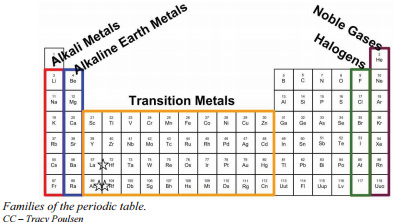
Families on the periodic table. Families on the Periodic Table. The IA family is made up of the alkali metals. The f-block columns between groups 3 and 4 are not numbered.
Groups usually have more significant periodic trends than periods and blocks explained below. Another common method of categorization recognizes nine element families. Most element families are a single column of the periodic table although the transition elements consist of several columns plus the elements located below the main body of the table.
Groups are the elements having the same outer electron arrangementThe outer electrons are also called the valence electrons. Group 1A of the periodic table. Aug 4 2017 - Students will be coloring the different families of the Periodic Table.
Groups 3 to 12 of the periodic table. Groups 3-12 - d and f block metals have 2 valence electrons Boron Group or Earth Metals. Elements within the same group have the same number of valence electrons.
Group 1 IA - 1 valence electron Alkaline Earth Metals. Group 2 IIA - 2 valence electrons Transition Metals. An example of an element family is the nitrogen group or pnictogens.
In chemistry a group also known as a family is a column of elements in the periodic table of the chemical elements. Elements on the periodic table can be grouped into families bases on their chemical properties. Halogens form ionic bonds with all kinds of elements.
The figure below lists some important families that are given special names. Each family has a. Group 7A of the periodic table.
To differentiate it from the other families in the periodic table. A vertical column in the periodic table. The completed colored chart can be used as a resource when playing the interactive games created by CHEM by Gloria.
Elements on the periodic table can be grouped into families bases on their chemical properties. This similar electron configuration leads to the elements in the same group having similar chemical properties. Alkali Metals Alkaline Earth Metals BoronAluminum Group Icosagens Carbon Group Crystallogens Nitrogen Group Pnictogens Oxygen Group Chalcogens Halogens and Noble Gases.
Are located in the second column from the right side of the periodic table group 17. Alkali metals Group 1 IA 1 valence electron Alkaline earth metals Group 2 IIA 2 valence electrons Transition metals Groups 3-12 d and f metal blocks have 2 valence electrons Boron group or earth metals. Elements in each family react differently or the same with other elements.
The Periodic table can be divided into nine families of elements each having similar properties. In reactions these elements all tend to lose a single electron. The halogen family consists of fluorine chlorine bromine iodine and astatine.
Another common method of categorization recognizes nine families of elements. What does each family have to differentiate it from the other families in the periodic table. Group 1 of the periodic table are the alkali metals.
There are 18 numbered groups in the periodic table. Group 1 or the first column on the periodic table are called ____. They all have seven valence electrons which make them highly reactive for covalentbonds.
The group family number is the number assigned to the vertical columns of the periodic table. Elements in each family. A group is a vertical column in the Periodic Table of Elements.
When the elements are thus arranged there is a recurring pattern called the periodic law in their properties in which elements in the same column group have similar properties. They are highly reactive and do not occur freely in nature. Group 2A of the periodic table.
Periodic table in chemistry the organized array of all the chemical elements in order of increasing atomic number. Group 8A of the periodic table. The IIA family is made up of the alkaline earth metals.
All these elements tend to lose two electrons. They are considered the most important method in classifying the different elements. A group or family is a vertical column in the periodic table.