In a non-grantor trust scenario the trustee will be the only party able to administer the income assets etc. We will summarize what a Foreign Grantor Trust is.
How To Save Estate Gift Taxes With Grantor Trusts The Basics Johnson Pope Bokor Ruppel Burns Llp
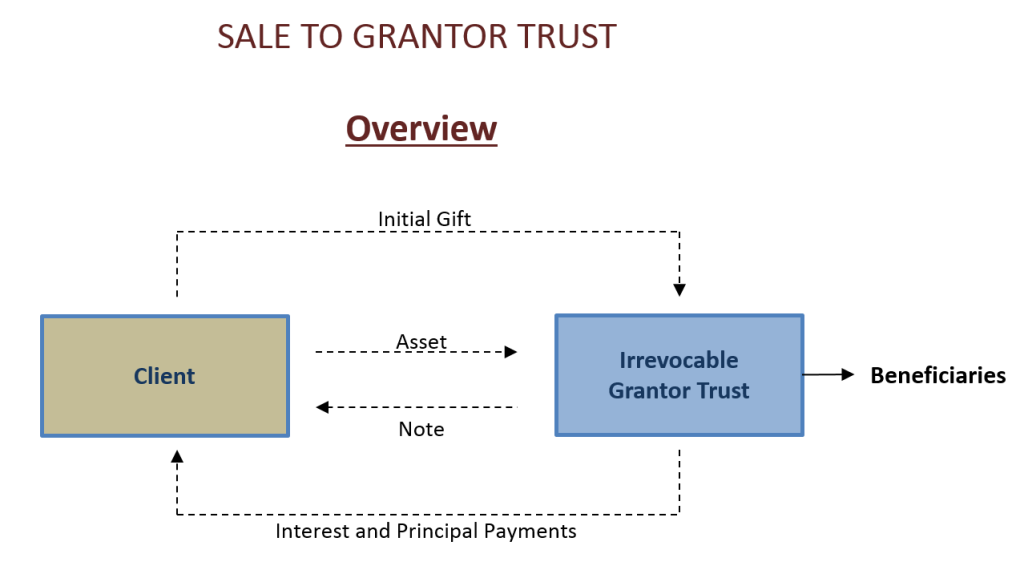
Grantor trusts and intentionally defective grantor trusts become non-grantor trusts at the grantors death.

Grantor vs non grantor trust. But grantors of grantor trusts maintain significant rights to the trusts assets and income. As a result the owner of the property has given up their right to the property which is now owned by the trust. A non-grantor trust pays income tax at the trust level on any taxable income retained by the trust.
If the grantor is the trustee the trust is referred to as a grantor trust. This is in comparison to a non-grantor trust in which the original grantor may no longer. A non-grantor trust on the other hand is recognized as a separate taxable entity.
It means that certain aspects of the trust allow the Grantor to exercise certain rights that would not be available to them in a Non-Grantor Irrevocable Trust such as an Irrevocable Life Insurance. In the scenario of a non-grantor trust the settlor isnt considered to be the tax owner and the trust would stand on its own. Trusts are legal instruments that can hold and manage assets on behalf of a specified beneficiary named by the original owner of the assets the grantor.
Grantor and non-grantor trusts are taxed differently. Both types of trust arrangements have advantages and disadvantages. Because of that theyre treated as if they are direct owners of the trust assets like a sole proprietorship.
The assets held within the trust are then managed by a trustee named by the grantor. In these circumstances it may be possible to give up or waive the grantor trust powers which would then convert the grantor trust to a non-grantor trust. A tax identification number for the trust must then be obtained.
If you have started the estate planning process youve surely heard of trusts. A far off Grantor Trust FGT is a sort of trust during which a non-US resident creates a trust for the advantage of beneficiaries living in the country. Non-Grantor Trust A non-grantor trust is an arrangement in which the donor grantor withdraws all of hisher control from the trust.
There are instances when a grantor assigns himself as the beneficiary of a living trust given that another party acts as the trustee. That is in general a non-grantor trust will be liable for tax on any income including capital gains that it retains while to the extent the non-grantor trust distributes income to its beneficiaries the beneficiaries will be liable instead. The concept of a non-grantor trust really determines that the trust itself is a standalone entity a taxpayer in its own right.
An irrevocable trust that is considered a grantor trust could be something like an Intentionally Defective Grantor Trust. A Nevada Incomplete-gift Non-Grantor NING trust is a type of non-grantor trust often created to avoid state income tax. Executor is the person appointed by the grantor to take charge of managing the trust.
A trustee can be just one person or a group of people. A Foreign Grantor Trust is a common type of trust that the grantor controls on behalf of the beneficiary. Essentially he or she gives up control over the assets and any income they produce an example would be a property that generates rental income or stock positions that pay dividends.
Non-grantor trusts are treated as separate entities like a C-Corporation. NING trusts work best when settlers are at the maximum federal tax bracket live in a high-income tax state and hold intangible assets eg private equity from a family business. The grantor version makes distributions to one or more charitable organizations during its term as does the non-grantor trust version but because the remainder goes back to the donor the trust is treated quite differently for tax purposes.
Also after the death of the grantor the trust will become a non-grantor trust. A non-grantor trust pays income tax at the trust level on any taxable income retained by the trust. A non-grantor trust also known as an irrevocable trust cannot be revoked unilaterally by the grantor.
A grantor trust is a trust that can be revoked by the grantor at any time as long as he is alive and mentally competent. Trusts are typically designed to have a single grantor to avoid any complications that may come up. This is in comparison to a non-grantor trust in which the original grantor may no longer have control over the trust direct or indirect absent some very creative planning.
A non-US resident is someone who isnt a US citizen isnt a real identification holder and is additionally not considered as a US taxpayer. In a non-grantor trust scenario the owner of the property in theory at least is no longer deemed the owner of the property and has relinquished control. If a trust makes a distribution to a beneficiary such distribution will pass the taxable ordinary income but generally not capital gains to the beneficiary to be taxed on the beneficiarys personal income tax return.
A Foreign Grantor Trust is a common type of trust that the grantor controls on behalf of the beneficiary. The term Defective does not mean the trust is broken or ineffective. Or you may no longer find it economical to your personal finances to pay the trusts income taxes.
Non-grantor trusts are still funded by the grantor but control of the assets is relinquished allowing the trust to. In a non-grantor trust the grantor cannot be named as a trustee beneficiary or a remainderman. Is the benefit provided to a US person considered taxable.